Beka from Uganda

Looking back to Africa

This man’s name is Ntende Beka Isabirye. I called him Beka (pronounced Bayka). He lives in the city of Jinja in the east of Uganda.

This man is following his vision to help others in a very significant way.

Beka brings forth the future of Uganda through technology.

I reached out to Beka recently in an email and received his warm response 5 hours later …re-igniting the fire and excitement of the time I spent with him and his team. I actually got to be ON the team!

Beka’s passion is to bring laptops to remote village schools without electricity, and to teach the middle school students there how to use laptops. He usually teaches 60 students at a time in 6 sessions. I was blessed to go along and assist a group of 6 students during my visit to Uganda in February. Beka started by introducing laptop terminology, the difference between a laptop and a desktop computer, including mouse vs. touchpad, how to turn it on, etc. Once the students have learned the basics about how to use the laptop and understand about charging and conserving electricity, he teaches them to use Word. The students are completely engaged by him and the lesson.

I do not know the specifics beyond the first lesson; Beka did mention enabling students to do research.

Beka and his team travel to the schools near Jinja, a city in the east of Uganda. Their intention is to give this generation of students the tools to succeed in today’s world, to attend college some day, and to do it all without having to emigrate to the USA. They want to keep the best of this generation in Uganda – to help them move forward and to support them to use their increasing wisdom and knowledge at home in Uganda.

Now they will have a leg up. They can produce a research paper! Perhaps they will be able to teach their friends. By the end of their series of classes with Tech Reach Africa, Beka’s organization, they will have joined the ranks of students who can have a hope of being accepted to college, as computer skills are necessary.

Beka and his team are changing the world.

When I was planning my trip to Africa, a friend said to me “What gifts will you bring?”

I had not thought to bring gifts. By the time I got home that day I had thought of my laptop in a box at home and found a person in my town to give it new life. Into my backpack it went and now it is among the laptops that are employed in the greater Jinja area. Here is a later photo of Abraham (adult on the left), who I worked with, and another adult getting in on the lesson – with the laptop I brought and a group of students at another school without electricity.

(The ICT label on the computer will eventually be Tech Reach Africa, a new name.)

Seeing the laptop in use and thinking about Beka, the work he does, and the time I spent with him as our host brings joy to my heart and soul.

I have more to share about Beka in another post. It this work excites you, please think about supporting Tech Reach Africa in their work with a donation, large or small. A small number of American dollars goes a long way in Africa. I expect to post an avenue to do this in the future.

Would you like to get blog posts sent directly to your email inbox? Subscribe below.

More about Bienvenu Kamwendo, our Congalese host

Looking back to Africa

I’ve found a short video of Bienve, our host in Democratic Republic of Congo, that I would like to share with you. This man is remarkable. He suffered from the lack of reliable adult presence and guidance early in life, and he managed to turn his challenges into blessings later on – blessings for others.

I recently spoke with Bienve about his personal story. Bienve never knew his father. His mother was not able to care for him for reasons I do not know. He lived with several families in childhood. When he was able, he worked selling fruit and taking photographs of tourists and selling them for pennies.

Bienve’s ancestors are from the Nande and Hera Tribes.

I don’t know all the details of his journey, but I know that he managed to go to school and become an attorney in adulthood. He shared with me the fact that he adopted 3 children well before he was married, children that needed guidance and support. One of them, Sarif, lives with his family still, and works for Remember Youth for Change, the non-profit organization he founded in Goma. As does his wife, Clarisse.

This man is a remarkable and outstanding human being. I stand in awe of him. His vision is all about helping others. Through his nonprofit and with the help of his staff, he provides pathways for young Congolese people to learn sewing, business, leadership, computer skills, and carpentry. He provides opportunities for them to engage in art and music. He provides activities and school shirts for children in multiple refugee camps. He rents fields for refugees to grow their own food.

All of these offerings are changing lives, healing wounds, and opening the future for others.

Something that touches my heart most deeply is that when hospitals in Goma find children with war injuries, they call Bienve. Knowing that these children received their injuries because of being child soldiers, and cannot return home to their villages, that they are societal outcasts, they call the man who can help them. Upon their release from the hospital, they are folded into Remember Youth for Change. They develop new selves with purpose. They find purpose in helping others, and training is available to them in carpentry, painting and agriculture.

Here Bienve tells about Remember Youth for Change in his own words.

Would you like to get blog posts sent directly to your email inbox? Subscribe below.
A Saxophone and a Clarinet!

Looking back to Africa

I am so excited!

When I was in Goma, our host Bienve asked if we could provide a couple of saxophones. At the time we didn’t have an answer, but this question took up residence within me. It seemed a small thing I might be able to do.

On our last evening in Congo, we stopped at the church that provides support to Remember Youth for Change. The band that practices there as a result of Bienve’s vision played a flawless rendition of Amazing Grace for us, delighting me – and cementing my intention to help. (We also met a pianist in a separate practice room.)

A couple of weeks ago I asked a musician relative if he could provide guidance on getting used instruments. He suggested I look for something on Amazon or eBay.

This was a bit intimidating to me. I have never navigated bidding for items on eBay. And how do I assess an instrument that I don’t even know how to play from photos and a description of “used?”

I thought I might be able to get the a better deal than on Amazon after looking at both options.

Nothing to do but plunge in.

I joined Ebay and looked at the saxophones under $100. I asked questions of those who were selling about the condition of the pads. I reviewed seller ratings. For a week I was outbid on every item, but then I put a bid on a clarinet for $14 and and a saxophone for $35. I was the highest bidder!

They arrived in their boxes a few days later. Now what?

I couldn’t just send them, I realized. I had to make sure that they worked and probably send some reeds with them.

I remembered that my step-daughter used to play the clarinet and her husband is in a band with a saxophone player. I called and asked …they were happy to try them out!

I dropped them off a couple hours before band practice a few days ago and after an hour I got a video of the sax being played beautifully! The clarinet is in good form as well.

My heart is full of gratitude to the sellers and to the testers and for my good luck and spiritual support!

I’m going to get some additional reeds and make sure I write down the brands of the instruments and anything I need to know about the reeds and …(oiling the cork?) so that I can pass the info on and in the future perhaps provide more reeds.

Then off they go to Goma!

OK – I’m off to hunt down another saxophone on eBay!

Soon I will be able to provide information about other ways to assist Remember Youth for Change in Democratic Republic of Congo.

In the meantime, I will be sending at least one additional shipment of musical instruments if you have any you are not using.

Would you like to get blog posts sent directly to your email inbox? Subscribe below.

Tribal Ways on Planet Earth

I have long perceived tribalism as a sacred way of living.

Until very recently, my perception and understanding of tribal ways has largely been informed by my limited knowledge of Native American tribes. There is something about this way of life that tugs strongly on my soul.

In my early 20s I first came to feel that I was born in the wrong time; I still yearn for greater simplicity, even though it comes along with a harder life, and sometimes a shorter one. The richness to me of connection to nature and to each other, and of simplicity seems incalculable in comparison to our current path of what I would call Disconnection.

My deepest connection, even in childhood, has been to the Land and to Trees and to Water and to Music and to Loved Ones and to other simple aspects of life that I now understand connect me to “Spirit.”

My knowledge early in life was largely of this land, North America, and it’s history. When I looked back in time, I looked to homesteading and growing one’s own food, having access to nature, including plants and animals. A life like this is also more connected to the cycles of nature.

In my late 20s and 30s I researched and learned about Native American history, practices, and beliefs. What I learned aligned with my understanding of what is important and valueable in this life. And so when I looked to the past, I now had a broader view, which included the four directions, the four elements, ways of planting according to natural cycles, animal and plant spirits, and other sacred tribal ways.

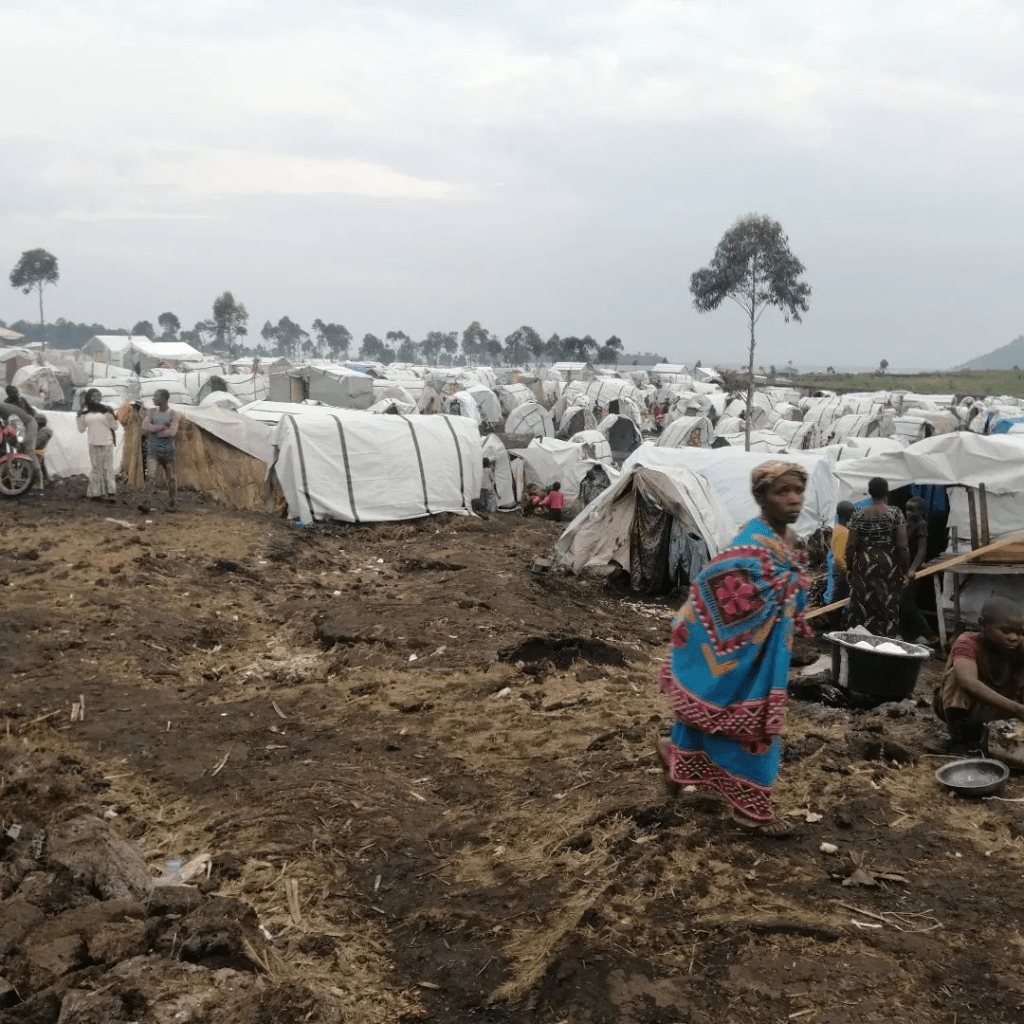
My knowledge of Native American tribal ways also includes stories such as “Dances with Wolves,” The Education of Little Tree, and Return of the Bird Tribes. All of these stories bring me to tears. These tears are not unrelated to the tears I held back when I visited the Bulango Refugee Camp in Democratic Republic of Congo, where the refugees have been very recently ousted from their ancestral (tribal) lands, and are now reorienting themselves in a strange place with no connection to their longheld and sacred ways.

Another experience that informed my understanding of my own yearnings for deep connection was participating in and leading full moon gatherings for over 30 years, something I will share about another time. This practice brought to me a deeper awareness of natural cycles, and simple practices that align with gratitude, wisdom, compassion, and more.

The final aspect that connects me to tribal ways is my shamanic work, which includes journey circles and shamanic healing. I could write a great deal about this. For now, I will simply say that it is sacred work that originates with a tribal understanding of the soul. And I must include the fact that Ancestors, the Four Elements, as well as Animal Spirits and Plant Spirits, Great Spirit or Creator, and our Natural World and Cycles play significant roles in tribal ways of life and perception, in my work, and in my life.

My visit to Africa has me returning to the deepest inquiries of my soul with new information, a broader perspective, and some questions.

I have a great deal more to say regarding these matters.

Would you like to get blog posts sent directly to your email inbox? Subscribe below.

Walking at the Bulango Camp

The Africa Posts

The sun was hot and high as we left the church, where the meal and the dancing and singing and laughter and connection took place. We (Bienve, his staff, and my son and I) turned right out of the structure and walked down a wide walkway, a continuation of the road we had driven on. We walked with purpose, and came to a place where the land dropped 6 or 8 feet, providing a wall below for a large group of young men and boys to kick a soccer ball against. 3 walls of humans beyond the drop-off formed a practice area. My son jumped down and gestured for the players to kick their best shots to him. They did. He served as goalie and missed the first 2 shots, then returned one, caught another, and on they played, shouting, cheering, laughing in the flow of this global pursuit of play, passion, physicality, and connection.

I realized during this time, approaching the soccer area and watching the action, that I had a protector. One of the staff members of Remember Youth for Change https://www.facebook.com/rememberyouthforchange had been assigned to (or assigned himself) to watch over me. I had met this young man on our visit to the office yesterday morning. I sensed he was one of those who had been abducted from his family to serve as a child soldier, but I don’t know this for a fact. He and one other man around his age (not much over 20) were always with us, sometimes driving. As Bienve and my son walked ahead, talking, this man was always by my side. I felt completely safe with him. I reached out for his hand or arm occasionally when I felt unsteady. He was always there, glad to help.

I referred to him later (to Bienve) as my bodyguard. I thanked Bienve for his presence. Thinking about this now, I believe that special concern and care for me arose from the text I had sent Bienve before we went to Democratic Republic of Congo, telling him of my husband’s wish that I not go to this country. Both of us were within arms length of protection, my son always with Bienve. I had not realized this at the time, had no idea that I was being watched over. I was not aware of this at the first camp, but I’m guessing he was there just outside the circle of children.

I wish I knew this young man’s name. I am not good with names in my own world, my own language. I know his name was told to me. (I had to ask several times to learn the names of Bienve’s wife and children.)

This young man, my protector in Goma, is the other person that I would like to help in some whay if the need ever arises. Payment for education, for a dowry? This is how one marries, I believe. Our driver in Rwanda told us he was saving for a dowry, to marry his chosen wife. Expenses are generally very small compared to here, but I truly have no knowledge of what this would mean. I would like this man to have blessings. I hope to talk to Bienve about it and to learn his name and express my willingness to help.

After 10 or 15 minutes, my son left the soccer field, we were brought to nearby toilets and wash station.

We walked back toward and past the church. Along our walks I smilled and greeted the people we passed with smiles and ‘bonjour.’ I’m not sure why, but the hardness and pain was gone from their faces. Did word travel about the meal, even though not everyone benefitted? About our serving the children, participating, connecting, the soccer play? Or perhaps they woke each day, newly grieving, and then the trauma subsided as the day passed and they engaged in their lives? I have no idea, but these people who had newly arrived at this massive camp looked into my eyes and smiled at me and said ‘bonjour’ in response to me. Not every one, but the majority.

Looking back, I felt I was witnessing healing at work, and I am so grateful for this.

We arrived a the humble small home of the “camp director,” where my son would give one of the new soccer balls to him. [This shelter was the same as all the others, and I have no idea what the role of the camp director is. One of the many questions I never thought to ask.]

I didn’t see the ball exchange hands, but I know it did. What I do remember is the humble prayer of gratitude that this man spoke in the open room. He gave thanks for the blessings of this day, the meal, the help, the connection, and for the blessing of us standing in his humble home on the floor of excrement. Bienve translated into English.

I remembered the kind and open face of this man, the camp director, from the events in the church. He ate with the church officials, he interacted with the people as a person of stature, and he served the food to the children.

The pastor also spoke with me in a friendly manner at one point, after he and I had eaten. I don’t recall the specific content of our conversation; it was in broken French and English. He served the people from behind the pulpit, but I did not see him engage personally. He may have. We all have our paths, but it struck me at the time that he and the other church officials ate on a bench behind the pulpit, out of sight. I know that I do not understand everything I saw. And there may be a value that I don’t understand in sustaining distance and formality.

As for me, I find close proximity and engagement to be the best path to help and healing.

Would you like to know more about Goma’s nonprofit Remember Youth for Change? https://www.facebook.com/rememberyouthforchange

After the Meal

The Africa Posts

After the meal at the Bulango Camp, we walked outside a bit. Initially there were trees here, but almost all of their slim trunks were used to shape the structures that serve as homes for each family.

Some of this time is a blur. Looking back, I realize how sleep deprived I was. I haven’t fully returned to balance as I write these words about 11 days after this meal I reported on yesterday. Right now it is early morning here, and it is 9 hours later in Democratic Republic of Congo – afternoon.

That afternoon, I had been in Africa for 7 days after a 23 hour segmented trip through the sky during which I slept 4 hours. Aside from my one day of hand washing clothes and visiting the Nile, I had full days every day, sometimes up before 4 am and/or up until midnight or later. I had fallen, injured my knee – which provided an extra night short of sleep due to monitoring my injury, changing my bandages and making sure I didn’t bleed on the linen. I got stitches the following day; my knee is still mildly inflamed. I somehow adjusted to the 8 or 9 hour time change (depending on the country) by force of our schedule. We had spent time in 2 areas of Uganda, slept in an airport due to cancelled flight, climbed a slippery hill in search of gorillas in Rwanda, crossed the border by land into DRC, and spent 2 very full days in Goma with Bienve.

I am quite aware, due to my condition since my return, of my age. Did I say I am 68? I am in good form for my age. I have eaten concsiously since my 20s, I lived on a fairly steep hill for most of the past 25 years, I did a lot of bicycling for 10 of the past 15 years, I stretch daily and walk often, though I am slowing down the past 2 winters. All of this allowed me to take this trip, and I know I will return to well-being soon.

For peace of mind, I will visit a specialist in tropical infections soon, although I expect a clean bill of health. Something passed through my body in the first few days home, but I am feeling stronger daily.

The impact of this journey on my soul is immeasurable. For all of it I am grateful. I carry much more within my soul than I did when I left. The impact of each soul I connected with, each child’s and woman’s face I looked into, smiles shared, hands touched, steps walked beside, meals taken with – has left its mark. And I also hold a part of the loss in my heart, the loss that came before that which now shows in the faces I looked into.

And I hold the knowledge of each helping person who saw the need and created solutions. I hold within me the knowledge and experience of those who wielded help and showed me these comparatively small areas of our planet with people in need, as a result of loss and trauma. They showed me how they took personal action to provide others’ healing and ability to walk forward into their uncertain future.

I stress “small areas of our planet” because I know that loss and pain and trauma exist in many other places as well. Places we hear about on the news. Places we are not aware of. Some are in our communities. Some are next door to us. I know that loving others are nearby to help. The loving others who help those in need is an important part of my story, though I have not written about it fully. I have only a miniscule knowledge of it. I know a small handful of their faces, shown to me on this journey – honored, appreciated and loved by me.

I hope to extend myself in ways that will unfold as I walk forward. My way is a smaller and more personal way than the way of these who create organizations and attract other helpers and step forward powerfully and bravely in love and support of their fellow humans. Their names are Beka (who I have yet to write about), Kuol, Bienve, and there are many others – those with vision, and those who spend their time and resources in support of the vision of these leaders.

Either way, it matters whether or not we choose to help fellow humans within our reach.

I have witnessed and touched a great deal. Were it not for the blessing of being able to share my journey through this writing, I would not be able to process it. But I am – day by day – in gratitude and love and grateful absorption, release and transformation. Thank you for reading my words. For caring, for being willing to hold this knowledge I share.

I meant for this post to be about the walk after the meal. But this day and this meal is a huge aspect of what I am carrying and holding now. And so it turns out that I have shared a bit more about this more personal aspect of what I saw and carry within “After the Meal.”

Would you like to know more about Goma’s nonprofit Remember Youth for Change? https://www.facebook.com/rememberyouthforchange

Potato Field, Allies, and “Thunder”

The Africa Posts

We returned to the van and drove on the central road to park by a large potato field on a hill. Near the van, more land was being tilled by some older boys of the refugee camp. It was clearly very hard going.

This camp had been in existance at least long enough to grow a crop of potatoes. Bienve had told us that an area of potato plants (out of sight, over the hill) had been dug up and taken recently. He said he did not blame the perpetrators; he knew that hunger drove them. However, it was a loss for the community.

The caring presence of Bienve can be seen here, in a video of displaced persons from one of the camps in Goma, working in the potato fields, creating agribusiness.

Beinve and my son walked up the hill to see the gardens beyond, and I stood by the working boys. The photographer who had been traveling with us leaned on the van, along with 2 men who had been child soldiers (1 was the driver). There was a steady trickle of children walking along the road and I wondered where they were going to and from. I smiled and said “bonjour,” and I soon had another group surrounding me. I felt a little closed in, and this group felt different than the walking group from earlier. I think it was my difference, my skin color, that attracted them for the most part. I heard the word Mzungu (meaning white person) a few times. There were no very young children, and it seemed like an elementary school crowd. I wonder now, whether there was some sort of informal schooling set up as well as the one we visited this morning. These children had no uniform, but I sensed they had purpose. Several said “money,” which I ignored, as I had been advised.

I reached out in my mind for some French words that I could say and after some faltering attempts I arrived at the phrase “Tout les enfants sont bon,” which means “All children are good.” The children agreed with n heads nodding. There was warmth and smiles. It may have been that I was a bit tired or depleted; it may have been that these children had less need. I learned that the level of need is much greater if one is a very recent refugee.

After maybe 10 minutes, a man came along to shoo away the children. I thought it was the photographer; he had a similar build. I didn’t like the fact that he sent them off unceremoniously, but I was in a mode of acceptance about choices made around me while I was in another culture in another part of the world.

I stepped to the other side of the road to talk with the man, who seemed to have something to say. There was some back and forth in English and French and after a few minutes he started asking me for money. I said no; I said I don’t have any, but why would he believe that? (My son was handling funds; the exchange rates were a bit confusing for me.) He persisted, and I glanced over to the van where my 3 friends were still leaning. I realized this wasn’t the photographer I was talking to. I left him and walked over to join them, leaning on the van until our next move.

I felt very comfortable with these men from Remember Youth for Change. https://www.facebook.com/rememberyouthforchange

The photographer was clearly a fan of mine. I had noticed him photographing me at various times. I had taken to smiling and pointing to my son as the main event – which he definitely was. I felt he (the photographer) was a person who saw value in my warmth, which I tend to offer easily. My son is the one, however, who cares enough to create change and to make sure the corporate funds he controls are used well – and expends a great deal of energy understanding what is needed in various parts of the world.

The 2 men who had experienced being child soldiers also have my heart, especially the one who was the driver. I will return to him another time.

At one point during this visit I heard thunder. I believe it was when we were standing by the potato field. I did not find out more until we returned to the US; at the time, it was kept from me that this sound was actually artillery fire. I never felt unsafe when I was in Goma or the surrounding area, but later it was explained to me that all was not as I experienced. I know no more about this and it is not my area of interest. Except that the occupants of the refugee camp have had to contend with this instability along with all of their loss.

Would you like to know more about Goma’s nonprofit Remember Youth for Change? https://www.facebook.com/rememberyouthforchange

Smiling from the Heart

The Africa Posts

I have left the DRC (Congo). I have left Africa. I am grateful to be heading home. My last day of travel to the airport in Rwanda was overshadowed by a mild case of food poisoning which sapped my strength. Better now as I write from my last layover.

My last 2 days in Congo were more impactful than I can express with words. However, I need to finish telling my story to the best of my ability.

I cannot say I am happy to leave Africa. I have fallen for the Congolese people. And for the refugees who now live in Goma.

What I offered to Uganda and Congo was my love. My son brought wisely placed funding, but all I had was love. On drives people were surprised to see our faces. I smiled at them with all my heart. Often people who looked hard at first – gave in to my sustained smile and returned it. It was a delight each time I broke through. In Uganda it was about 75%, but in Congo more like 30%. At first I thought it was because they had not seen whites before, but my son explained this was not the case. They have encountered whites significantly more often in Congo.

They are more wary.

Children are much quicker to meet me in my smile, but in Congo, there were some tough ones. One girl I specifically remember who would not give in comes to mind. I was standing by the van we arrived in at the first refugee camp, waiting for my son. He and Bienve had climbed a hill and looked over some gardens. This girl, maybe 9 or 10, lingered after the other children I was talking to were dispersed by a man who, it turned out, wanted to ask me for money.

As I waited for my son, leaning against the van with the photographer and 2 protectors (who were once taken as child soldiers), I smiled occasionally at the girl. She barely met my eyes, sustaining a sullen look of something like belligerence. Finally Bienve and my son returned, and as I walked around the van, I smiled again at the girl and saw for an instant the flash of a smile.

These smiles I have received are my richest souvenirs. Though I cannot display them, they live within me.

Deep thanks to Julie, who created this website for me. She posted these posts about my journey while I was away. See info about Julie in the footer at the bottom of the page.

Whether or not to go to DRC (Congo)

The Africa Posts

If you are one who follows the news, you will know that there are reports of a rebel army approaching the city of Goma in the Democratic Republic of Congo. Reports also tell us that food supply lines to Goma are threatened.

My son and I are to spend the final 2 days of this journey in and near Goma.

Over time I have come to feel that some of the stories told by news organizations are just that- stories. Their purpose is to manipulate and create outcomes I do not claim to understand. I am now in a position to make a personal decision based on what I believe.

My son arranged months ago for a resident of Congo to pick us up in Rwanda and drive us across the border. He will be with us at each event and time of transport for our time there, dropping us off at our hotel at the end of the day and picking us up again in the morning. He will also drive us back to Rwanda.

Our hotel has armed guards; this is not a new development.

This man has been an associate of my son’s for 3 years. He works with child soldiers to help stabilize their lives once released (or escaped), and he works to support more than one refugee camps. He is also an attorney. My son trusts him.

My husband is understandably concerned about me going to Congo at all, and specifically to Goma. He has asked me not to. But this journey with my son is important to my relationship with him, and is one in which I decided to trust. I have always planned to accompany my son for the full 8 days. I do not feel fearful.

I decided that I would personally reach out to our host in a text. My son forwarded this message from me:

Hello Bienve –

I have seen your face, I have read about your work with the children, and my son trusts you. My husband is very worried. I want to hear directly from you that there is no cause for concern if we come to your country as planned. No danger to a traveler from the US? No threat of not having food? I am a 68 year old woman who is strong in spirit and well in body. I intend to continue with my plan to accompany my son on this leg of our journey if you tell me there is no cause for concern.

Many blessings.

Annie Breglia

I received this reply:

Hi Annie,

Nice to hear from you. Goma is very safe, people have destroyed the image of Goma because of their own international Mafia. I can’t talk a lot about Goma as you are very closer you will see by your own all things have been well planned and children are prepared well for welcoming you on the field. Can’t wait to meet you, I know you will have a good memory once back home safely. (smiling emoji) Lastly in Goma we have all international organizations working locally and they are safe. Welcome once more and be blessed have a good memory once back home safely. (smiling emoji)

Bienve

And so I am going to complete this trip with my son as planned.

I have no fear or trepidation and plan to continue walking in love.

Would you like to get blog posts sent directly to your email inbox? Subscribe below.

The Nile

The Africa Posts

Today my son and his friend are white water rafting on the Nile. My knee injury prohibited that, but as my luck would have it, the property where our cabin is for two nights is adjacent to the Nile. 

And so here I am on this beautiful day of so many dragonflies and birds. I have walked down to the river and I stood in it. It is not cold. A friendly dog accompanied me. He is enjoying barking at some birds which I cannot identify. There is a mild breeze. The river is wide and peaceful. 

A beloved song came to me. Watch this video of the Nile and listen to this phrase of a prayerful song written by Holly Near in 2006, and sung by me today. 

Annie sings “Oh River” while enjoying this view of the Nile.

Would you like to get blog posts sent directly to your email inbox? Subscribe below.