I Chose My Husband Well

I chose my second husband well.

He speaks the truth, and he doesn’t feel he has to say everything he thinks. This is of primary importance to me.

He is very much a home guy.

He loves animals and plants the way I love children.

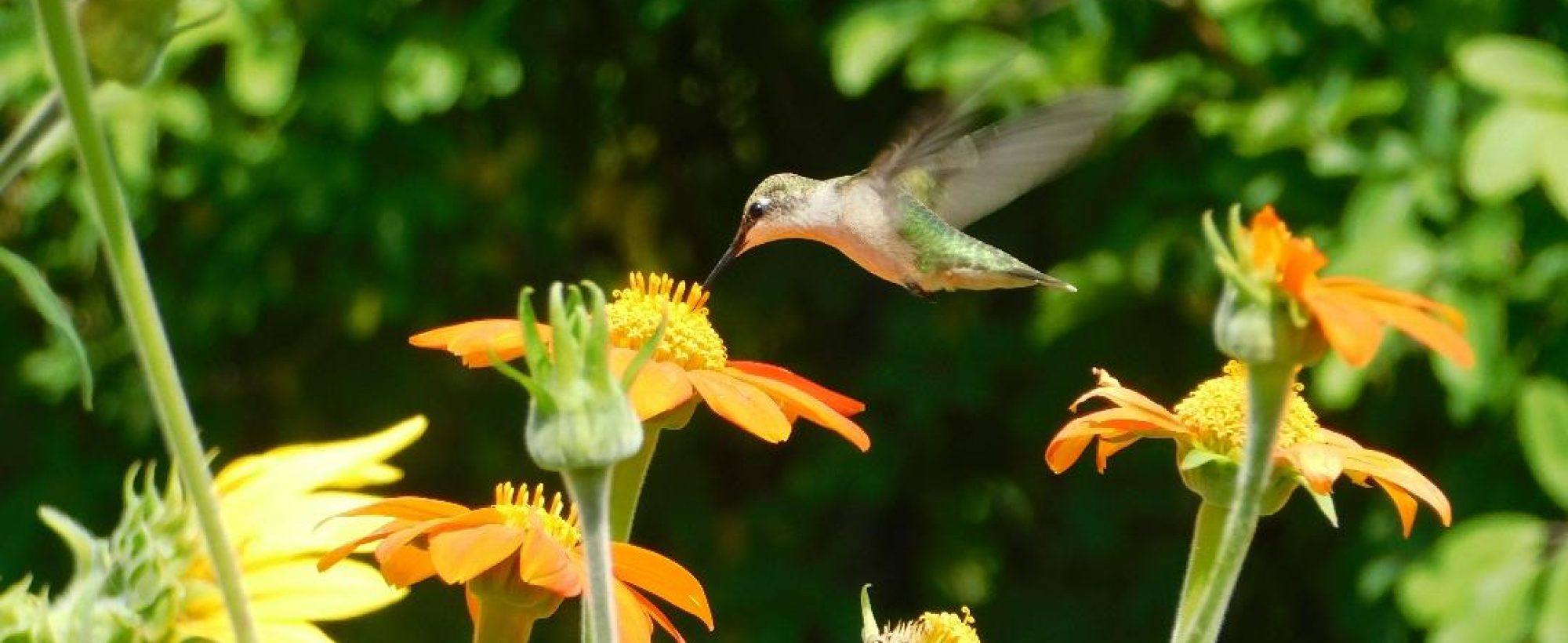
I am a gardener. I have been growing vegetables since my 20s – and some fruit bushes and trees. My husband gardens with an expertise that I don’t have. And he brought flowers to the garden! He bravely plants sunflowers right in the middle of the rows of vegetables – along with tithonia, zinnias, cosmos, and specific pollinators for his bees.

There are flowers everywhere! He just installed our summer hanging flowers – fragrant petunias and lovely fuchsia with the hummingbirds in mind – and other colorful blossoms as well.

He enjoys thrift shops the way I do – and he seeks out loves yard sales.

He loves music, as do I. We listen to live music fairly regularly locally and travel to see excellent musicians occasionally.

He loves the displays of nature and traveled to see 2 total eclipses with me! We also share a love of the ocean and the hills and the woods.

He is wise about money in a way that I have never been. Over time I have become more conscious and frugal, and he has stopped worrying as much about finances.

He got me bicycling and hiking and I got him eating more vegetables.

He participates in community theater! This is a love of mine since high school. And he’s very good at it.

He can be grouch in the morning when I am at my best, and he is at his best in the evening when I am sometimes a grouch.

I’ve learned from him to hold my tongue and he’s learned from me to let go of stress.

He is a lovely person to travel through life with, and to grow old with.

I am blessed by his presence in my life in so many ways – some of which took me years to recognize.

My gratitude is boundless.

Would you like to get blog posts sent directly to your email inbox? Subscribe below.

William Bartram on Native American Tribes in the 1700s

This morning I read a passage from a book on William Bartram, naturalist in the 1700s. He was a Quaker and a peaceful soul who traveled to observe and identify species of plants as well as observing animals and humans.

My husband has been urging me to read several pages that describe Bartram’s view on the tribal people who lived on this land before Europeans arrived. He knows of my interest in tribal ways.

In the book, excerpts from Bartram’s writing told of how the native tribes helped the newcomers, how they extended the hand of friendship and trust to our ancestors. (I speak as a Caucasian of partly British descent when I refer to my or “our” ancestors.) He spoke of the similarities between the 2 ways of governments, industry, and worship. Great Spirit was acknowledge by the tribes to be the same as the deity that was worshipped by the “visitors.” They we open to adopt the religion, the practices, the currency and many of the ways of our forefathers. They were willing to accept decisions of our leaders in important issues that went beyond the considerations and matters of their individual tribe.

The tribal leaders entered into agreements with the government of the white men and honored those agreements.

The people who inhabited these lands, ceded part of their lands and moved for the convenience and wellbeing of those who came from afar.

The native people who Bartram encountered opened their hearts to their brothers from across the sea.

The Europeans brought pottery and metal tools for cooking, agriculture, etc. They brought woven fabrics for clothing and other utility. The native people appreciated and traded for these items. After a couple of generations, passed, they lost the ability to fashion the tools they once made to, including implements of stone and bone to grind grain, to hunt animals, and to live their lives independently with the resources of the land. This made them weak when the tide turned against them. They could not defend themselves or even resume their prior independent livelihoods – trapping and trading and working with animal hides. They could no longer easily grow their own food. Their hunting grounds were no longer available to them.

It was not difficult to control, displace, or defeat those who had once reached out in trust and friendship, helping to secure the footing of the white man on these lands.

Bartram and a few others of his day were called “Indian lovers,” – a derogatory term. Their knowledge of and interaction with native people was not appreciated or aligned with the greater perspective of those of European descent.

There are aspects of this information that I did not previously know. I was especially not aware of how weakened the tribes were by there acceptance of the ways of the colonists. It does not take long to forget old ways.

I have witnessed this myself with the ways of increased technological solutions to life’s challenges. A man who once printed a local newspaper could not interest his son – or anyone – in carrying on his work. Very few of us know how to can or dry food, weave fabric, forge metal implements, create pottery bowls, or even plant a garden. It is worrisome to know that we can not survive on our own. Especially in a time when our structures seem so precarious.

My thoughts return now to my experience with my peace pipe when I lived in CT. The pipe was fashioned by a Native American woman in Illinois. My sharing of the pipe ceremony eventually led me to a confrontation with members of the Native American community in the greater Hartford area. LINK

Today I have a much better and deeper understanding of the mistrust the tribal people I encountered felt toward me.

Would you like to get blog posts sent directly to your email inbox? Subscribe below.

Refrigerator Wisdom #1

Many of us have reminders or personal notes on our refrigerators. Along with vibrant artwork of children. My children, and even my grandchildren, no longer gift me with their creative displays. Hope springs eternal that more children will populate my life. They do require a lot of time and focus, but in my opinion they are the best kind of people – honest, open-hearted, loving and questioning.

But I digress.

I have 3 reminders that have been taped to my fridge for years. Every once in a while they have to be rewritten because they are important to me. These are deeply meaningful to me, and they caught my eye this morning.

This first one was told to me by the father of a delightful and caring woman who was in my son’s life quite a few years ago.

These words say a great deal to me and about me.

I am wired somehow not to waste things, including food, clothing, jars, plastic bags, cardboard boxes, rubber bands, twist ties, etc. I am one who saves scrap paper rather than purchasing notebooks. For me, part of growing vegetables in my garden is to make sure they are weeded, picked in their prime, and served up on someone’s table. If I am seeking some item of clothing, furniture, or a cooking pot, I first check the local thrift shops. And anything we no longer need goes there for re-use by others.

I pride myself in having a small footprint. This was a concept I ran across in my 20s, long before concerns about global warming. But they do align with respect for Mother Earth and not littering.

I have long recognized that our world is full of manufactured crap and most people have somehow been programmed to buy, buy, buy and casually throw away pretty much everything. Things, especially cars and clothes, must look good! They represent us! To me this is a tragic state of affairs – to let these things define and represent us.

We are not things. We are amazing beings. Our words and our actions are what truly represent us. Anyone can see this, especially a child.

My parents did not feel that keeping up with the Jones’s was their mission in life. For this I thank them.

I look like the weird kid in school class photos. I didn’t smile properly, I didn’t focus, my hair was not quite right, nor were my clothes. This disturbed me mildly for many years, but today I know who I am and none of that is what matters to me.

What matters is the way I treat others …and the wisdom I carry …and how I conduct myself. This is what I have been honing all my life, not having the most and the “best” stuff.

If you visit my house, it won’t be fancy. It contains favorite things that express who we are and it allows some space.

My husband is a lot like me, although he does like his vehicle to be perfect. I see him loosening up a bit, though, these days. His truck has some tools in disarray behind the seats the back – and a few rust spots!

I hesitated to share this message today. But the mission given to me was to write the contents of my soul. My 3 pieces refrigerator wisdom that have been with me for many years definitely qualify.

Would you like to get blog posts sent directly to your email inbox? Subscribe below.

Beka from Uganda

Looking back to Africa

This man’s name is Ntende Beka Isabirye. I called him Beka (pronounced Bayka). He lives in the city of Jinja in the east of Uganda.

This man is following his vision to help others in a very significant way.

Beka brings forth the future of Uganda through technology.

I reached out to Beka recently in an email and received his warm response 5 hours later …re-igniting the fire and excitement of the time I spent with him and his team. I actually got to be ON the team!

Beka’s passion is to bring laptops to remote village schools without electricity, and to teach the middle school students there how to use laptops. He usually teaches 60 students at a time in 6 sessions. I was blessed to go along and assist a group of 6 students during my visit to Uganda in February. Beka started by introducing laptop terminology, the difference between a laptop and a desktop computer, including mouse vs. touchpad, how to turn it on, etc. Once the students have learned the basics about how to use the laptop and understand about charging and conserving electricity, he teaches them to use Word. The students are completely engaged by him and the lesson.

I do not know the specifics beyond the first lesson; Beka did mention enabling students to do research.

Beka and his team travel to the schools near Jinja, a city in the east of Uganda. Their intention is to give this generation of students the tools to succeed in today’s world, to attend college some day, and to do it all without having to emigrate to the USA. They want to keep the best of this generation in Uganda – to help them move forward and to support them to use their increasing wisdom and knowledge at home in Uganda.

Now they will have a leg up. They can produce a research paper! Perhaps they will be able to teach their friends. By the end of their series of classes with Tech Reach Africa, Beka’s organization, they will have joined the ranks of students who can have a hope of being accepted to college, as computer skills are necessary.

Beka and his team are changing the world.

When I was planning my trip to Africa, a friend said to me “What gifts will you bring?”

I had not thought to bring gifts. By the time I got home that day I had thought of my laptop in a box at home and found a person in my town to give it new life. Into my backpack it went and now it is among the laptops that are employed in the greater Jinja area. Here is a later photo of Abraham (adult on the left), who I worked with, and another adult getting in on the lesson – with the laptop I brought and a group of students at another school without electricity.

(The ICT label on the computer will eventually be Tech Reach Africa, a new name.)

Seeing the laptop in use and thinking about Beka, the work he does, and the time I spent with him as our host brings joy to my heart and soul.

I have more to share about Beka in another post. It this work excites you, please think about supporting Tech Reach Africa in their work with a donation, large or small. A small number of American dollars goes a long way in Africa. I expect to post an avenue to do this in the future.

Would you like to get blog posts sent directly to your email inbox? Subscribe below.

More about Bienvenu Kamwendo, our Congalese host

Looking back to Africa

I’ve found a short video of Bienve, our host in Democratic Republic of Congo, that I would like to share with you. This man is remarkable. He suffered from the lack of reliable adult presence and guidance early in life, and he managed to turn his challenges into blessings later on – blessings for others.

I recently spoke with Bienve about his personal story. Bienve never knew his father. His mother was not able to care for him for reasons I do not know. He lived with several families in childhood. When he was able, he worked selling fruit and taking photographs of tourists and selling them for pennies.

Bienve’s ancestors are from the Nande and Hera Tribes.

I don’t know all the details of his journey, but I know that he managed to go to school and become an attorney in adulthood. He shared with me the fact that he adopted 3 children well before he was married, children that needed guidance and support. One of them, Sarif, lives with his family still, and works for Remember Youth for Change, the non-profit organization he founded in Goma. As does his wife, Clarisse.

This man is a remarkable and outstanding human being. I stand in awe of him. His vision is all about helping others. Through his nonprofit and with the help of his staff, he provides pathways for young Congolese people to learn sewing, business, leadership, computer skills, and carpentry. He provides opportunities for them to engage in art and music. He provides activities and school shirts for children in multiple refugee camps. He rents fields for refugees to grow their own food.

All of these offerings are changing lives, healing wounds, and opening the future for others.

Something that touches my heart most deeply is that when hospitals in Goma find children with war injuries, they call Bienve. Knowing that these children received their injuries because of being child soldiers, and cannot return home to their villages, that they are societal outcasts, they call the man who can help them. Upon their release from the hospital, they are folded into Remember Youth for Change. They develop new selves with purpose. They find purpose in helping others, and training is available to them in carpentry, painting and agriculture.

Here Bienve tells about Remember Youth for Change in his own words.

Would you like to get blog posts sent directly to your email inbox? Subscribe below.

More about my sacred pipe

[Back in early February, I started to write this post. It links back to a prior post about the Native American leg of my spiritual journey in this life I’m living. I have thought often about finishing the story, but it was hard to write. I did not navigate events in the way I would have liked to.

If you want to know more about my religious background and my starting place, you can also read about my early experience with Christianity.]

My spiritual search began in my late 20s. I was drawn to Earth-based spirituality, and I knew enough about the practices of those who inhabited this land before us that they honored Earth, Nature, the cycles of the seasons and of the sun and moon, as well as animal and plant spirits. I researched and studied about various tribes for a couple of years.

It turned out that my destination was not to align fully with Native American spirituality, as you will see. However it gifted me with a sacred pipe ceremony. I learned (from the book Return of the Bird Tribes by Ken Carey) this ceremony and a beautiful story of it’s origin in my 30s brought me a way to connect with my deepest self, and to make decisions with an awareness of “All that is.”

This is the part of the story I didn’t share earlier, about how I moved on in my 30s from the Native American chapter of my search …

I shared this sacred practice of the pipe ceremony with friends and family. It was a beautiful way to navigate life and to approach decision-making and sometimes even to speak difficult words or resolve disharmony. Read more about my experience with the pipe and the pipe ceremony here.

Eventually I extended myself to share the pipe ceremony with more people. I arranged with a friend, Steve, who offered a space for classes and small concerts – to offer the pipe story and ceremony there. In the small empty carpeted room I constructed a circle with branches and marked the 4 directions, each person entering at the East, the place of beginnings. We all sat on the floor and I read the story of White Buffalo Calf Woman bringing the pipe to the Soiux …then we smoked the pipe together as the ceremony instructs.

It was lovely. I met a neighbor who I hadn’t known and about 8 or 10 other people showed up. Afterward we talked and then people dispersed.

I had a jar for donations and I raised about $12 that went toward paying my babysitter that evening.

I decided to do it again and Steve advertised in the Hartford newspaper that I would be sharing the pipe ceremony for donations. And the trouble began. A non-native was making money from the sacred tribal traditions.

I knew that people had co-opted native practices, such as sweat lodges and vision quests – and capitalized upon them. I didn’t perceive myself in that light, but I can see from where I now stand that there is a fine line …and who knows where I was going with this?

The descendants of the people my ancestors and their leaders betrayed saw yet another betrayal. People started calling me in concern and anger. Some people were openhearted and listened to my explanation of how I came to share the pipe with others. The pipe-carrier of the Mohegan Nation and I had a very long talk and he was fine with what I was doing.

Some did not want to know what I had to say. Suddenly I was facing anger and threats against my family and my home.

I managed to turn the advertised sharing of the pipe ceremony into a meeting with some tribal leaders in the Hartford area. I was young and did not navigate this meeting well. I was afraid and did not speak when I could have.

Later I realized that I should have led the meeting, explaining my journey to the pipe (as I had with the pipe-carrier). But the threats had frightened me. I sat and waited, disempowered by my fear. I was told that a chief was here. I was made to understand that he was wasting his time. Later I understood what happened, and I have forgiven myself for my lack.

I did not attempt to share the pipe again with others not close to me, although my relationship with the pipe continued for many years after I left Connecticut.

I was looking for a spiritual home, but this did not show up as being a path for me. I did not find a person who would share with me, or invite me to share in Native American spiritual gatherings or experiences. I assumed they were closed to outsiders because of my experience, but I don’t know that it was true. With all that occurred on this continent I would not blame them if it was true. Or maybe I was simply too scared to ask.

I cannot recall who told me that I should turn to my own heritage, but that’s what I did.

Later, a teacher of sacred ways of some earth-based European traditions said to me that we were born on this soil and we live our lives on this soil and some of the voices and elements that speak to us carry Native ways. This helped me to make peace with myself and what had happened with attempting to share my pipe.

I didn’t understand until writing this post, how deeply this experience aligns with and informs my current orientation about tribal ways, the ancient ways that have gifted me with a way to heal and to help others. I am grateful now for my experience with the Mohegan community in CT. And I acknowledge this experience as a part of my path and understanding of the healing.

Since I am living on this continent, I expect that my studies on tribal experience and ways will focus to some degree on the tribes of this land, as well as on the African connections I now have.

Would you like to get blog posts sent directly to your email inbox? Subscribe below.